
address
316 W. 2nd S
Soda Springs,
Idaho
83276
United States of America
208-547-3125
STAR Physical Therapy
Introductory Courses Myochains and Spinal Ligs (MS1), Foundations of Fascial Counterstrain (F1), Cartilage / SF dysfunction (MS3), Lymphatic Venous Combined (2014), Arterial Dysfunction (AR), Neural Upper Quadrant (N1), Periosteal Dysfunction (MS2), Neural Lower Quadrant (N2), Visceral (VS), Cranial Periosteum and Cartilage (CSS1), Astrocytes, mediastinum & Sulcal Vessels (CSS2), Epidural Ligament Supplemental (N1 SUP), Tendon-lymphatic Chains, Lymphatic-Venous part 1 (LV1), Lymphatic-Venous part 2 (LV2), ANS & CRANIAL NERVES (N1), Adipose, (N2) Dura, Dural Tube & Somatics Counterstrain Mastery Programs CSA Module 1 Intro: Counterstrain and the Cranial Scan, CS Convention 2019 Mod 1, Counterstrain Convention 2019, CS Virtual Convention 2020, CSA Module 5: Counterstrain for the Nervous System, Part 1, CS Convention 2023, CS Convention 2025
Doug Ball, MPT ATC
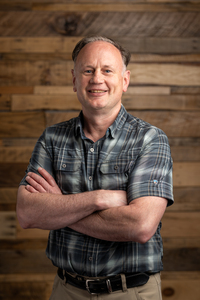 Doug's passion for physical therapy began when he tore his ACL during his senior year of high school. His experience with rehabilitation following surgery inspired him to pursue a career helping others recover from injuries, restore movement, and return to the activities they enjoy.
He earned his Bachelor of Science in Athletic Training from Brigham Young University in 1996, followed by his Master of Physical Therapy from Idaho State University in 1998.
He began his career in a high volume outpatient sports medicine setting, gaining extensive experience treating orthopedic injuries, post-surgical conditions, and a wide variety of musculoskeletal disorders.
After nearly 20 years in practice, Doug discovered Fascial Counterstrain while attending a course through the Jones Institute. During the course, an instructor performed a Fascial Counterstrain technique that relieved his longstanding sacroiliac joint pain. The relief lasted eight months and completely changed his perspective on what physcial therapy could accomplish.
For Doug, discovering Fascial Counterstrain was a turning point in his career--and it continues to be one of the most rewarding aspects of his practice.